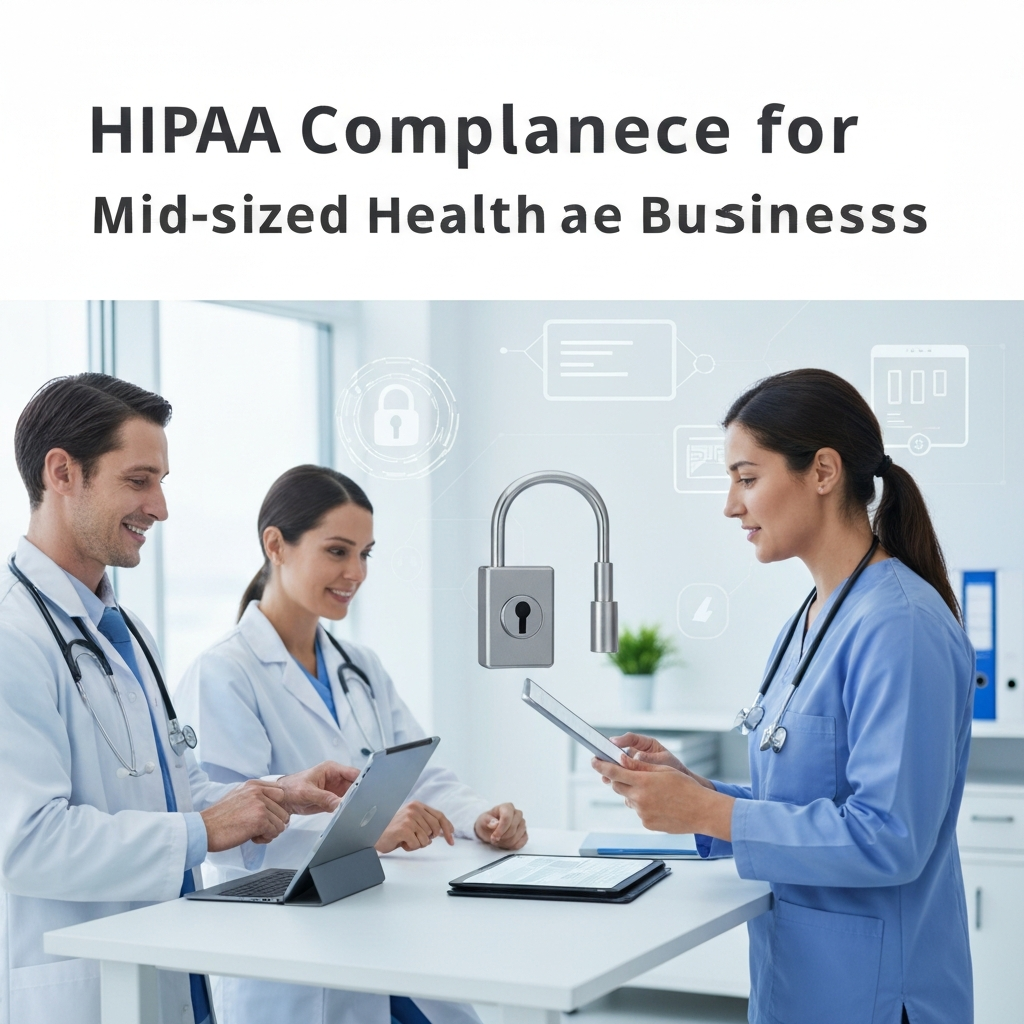
HIPAA Compliance Guide for Mid-Sized Healthcare Businesses 2025
Ensuring HIPAA compliance is crucial for mid-sized healthcare businesses to protect patient information and avoid hefty fines. This comprehensive guide breaks down HIPAA requirements and offers a step-by-step checklist to help your organization stay compliant. Additionally, we’ll explore how Managed Service Providers (MSPs) can assist in maintaining compliance.
Understanding HIPAA Compliance Requirements
Privacy Rule: The Privacy Rule protects individually identifiable health information (PHI) and limits its use and disclosure without patient authorization. It also grants patients rights to access and amend their health records.
Security Rule: The Security Rule sets standards for protecting electronic PHI (ePHI) through administrative, physical, and technical safeguards:
- Administrative Safeguards: Security management processes, workforce security, and training.
- Physical Safeguards: Facility access controls and workstation security.
- Technical Safeguards: Access controls, audit controls, and integrity controls.
Breach Notification Rule: This rule requires covered entities to notify affected individuals, the Department of Health and Human Services (HHS), and sometimes the media of breaches of unsecured PHI.
HIPAA Compliance Checklist
- Determine HIPAA Applicability: Identify if your organization is a covered entity or business associate.
- Appoint HIPAA Officers: Designate a HIPAA Privacy Officer and, if necessary, a Security Officer.
- Conduct Risk Assessments: Regularly assess risks to PHI and ePHI.
- Implement Safeguards: Administrative (Develop policies and procedures, conduct training), Physical (Secure facilities and workstations), and Technical (Implement access controls, encryption, and audit controls).
- Develop Breach Response Plan: Establish procedures for breach notification and response.
- Regular Audits and Monitoring: Conduct regular audits to ensure compliance and identify vulnerabilities.
How MSPs Ensure HIPAA Compliance
Managed Service Providers (MSPs) can play a crucial role in maintaining HIPAA compliance by providing the following services:
- Risk Assessment and Management: MSPs conduct thorough risk assessments to identify vulnerabilities and implement tailored solutions.
- Data Encryption: Encrypt patient data both in transit and at rest to meet HIPAA standards.
- Disaster Recovery Plans: Develop and test disaster recovery plans to ensure data protection during emergencies.
- System Updates and Patches: Regularly update and patch systems to close security gaps.
- Compliance Expertise: Provide HIPAA training and support to ensure all staff understand compliance requirements.
- Business Associate Agreements (BAAs): Sign BAAs with clients to acknowledge responsibility for PHI.
By following these steps, mid-sized healthcare businesses can effectively navigate HIPAA compliance and ensure the protection of patient information. If you need more detailed information or specific examples, feel free to reach out to EZETech for expert guidance.