Driver's License Data Breach: FBI Investigates 153M Exposed Records
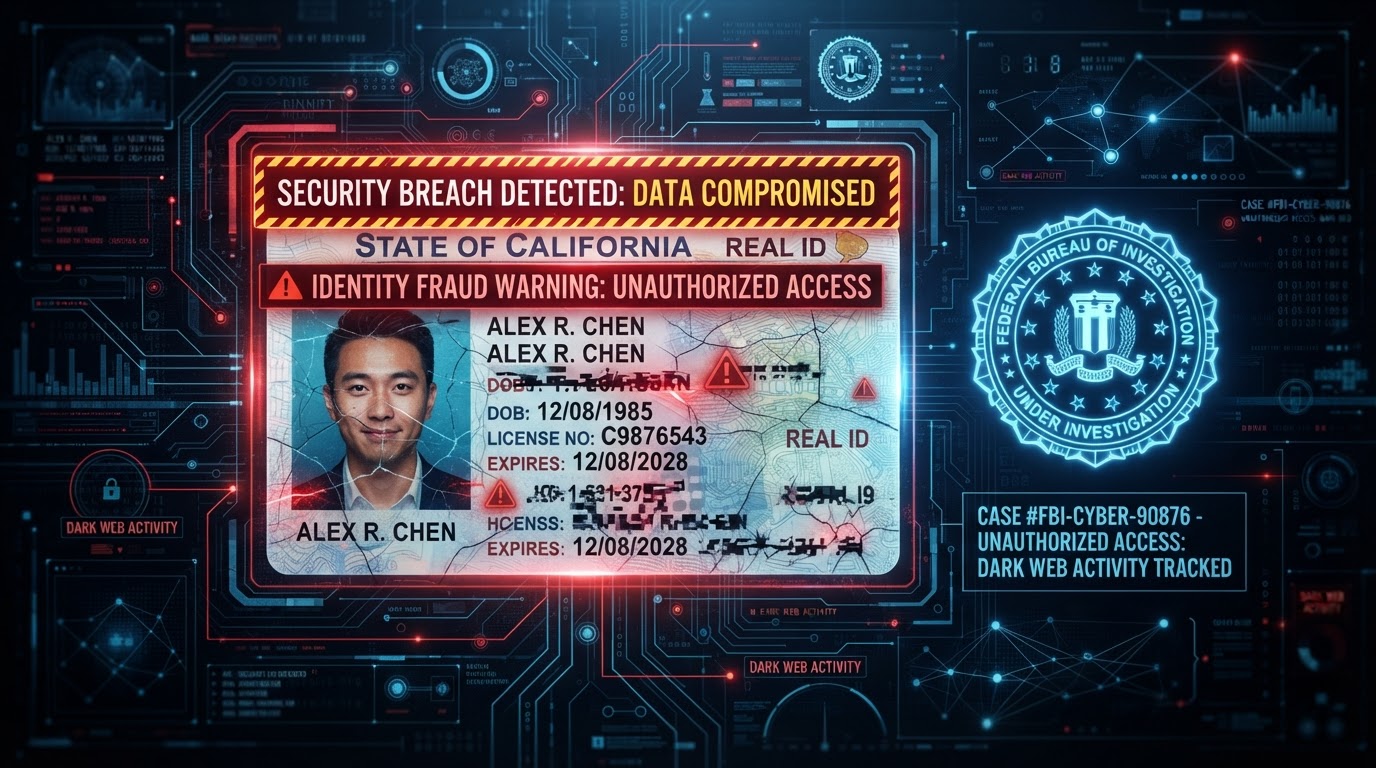
A massive driver's license data breach involving more than 153 million state-issued IDs, travel documents, and medical cards has triggered an urgent federal investigation. Federal agents are probing how stolen identity files appeared for sale on dark web marketplaces.
If you have rented a vehicle, visited an age-restricted retail location, or used identity verification services recently, your high-resolution driver's license scans may have been exposed. Understanding what happened and taking immediate protective steps is critical to preventing identity theft.
What Happened? A Massive Driver's License Data Breach
A dark web shop named 'Nexus' listed over 153 million driver's license scans from residents in the United States and Canada for sale in early September 2026. Security researchers confirmed that each record contained multiple high-resolution digital scans, including front, back, infrared, and ultraviolet images.
Investigative journalist Brian Krebs first uncovered the listing on a prominent cybercrime forum called Exploit. The illicit database also claimed to contain over 10 million secondary ID cards, 3 million international travel documents, and nearly 580,000 state medical and marijuana dispensary cards.
Unlike static password leaks, these records represent complete digital identity packages. Cybercriminals offered sample records containing official licenses of high-profile targets, including U.S. Defense Secretary Pete Hegseth, highlighting the alarming reach of the compromise.
Each entry often included exact timestamps matching real-world car rentals, hotel stays, and airport transit dates. The database was reportedly updating in real time with up to 400,000 new records daily before the dark web site vanished following media publication.
Who Is Investigating This Breach?
The FBI New Orleans field office launched a formal criminal investigation into the source of the stolen records. Authorities are focusing on an ID verification service breach linked to Louisiana-based tech provider IDScan.net, which builds software used by rental agencies, casinos, dispensaries, and national retailers.
Investigative findings connect several leaked records to customers of rental car giant Hertz, Target, FedEx, Caesars Entertainment, and various licensed dispensaries. Affected individuals confirmed that their license timestamps matched dates they physically presented their IDs at vehicle rental counters or retail scan stations.
IDScan.net confirmed it is investigating a potential security incident but has not publicly confirmed a full breach. Corporate clients like Caesars stated they do not retain guest scans on vendor servers, indicating that the vulnerability likely occurred at the verification provider level.
Because the vendor serves enterprise clients nationwide, the impact extends far beyond Louisiana. Federal investigators are working alongside threat researchers to determine whether the data exfiltration was caused by an exposed cloud storage bucket or a compromised API endpoint.
Why a Driver's License Breach Is So Dangerous
A compromised driver's license poses a severe, permanent security threat because it contains unchangeable personal identifiers and official state security markings. Unlike passwords, you cannot simply change your date of birth, driver's license number, or facial biometric features.
- Unchangeable Personal Identifiers: Your driver's license number, legal name, address, and date of birth remain static for years, making stolen credentials perpetually valuable to identity thieves.
- Synthetic Identity Theft: Fraudsters combine stolen license scans with real Social Security numbers to open fraudulent bank accounts, secure auto loans, or file fake tax returns.
- AI Deepfake Fraud: High-resolution infrared and UV image scans enable cybercriminals to train AI models that bypass automated biometric verification systems used by financial institutions.
- Bypassing ID Verification: Many online credit applications and government portals require users to upload a photo of their physical ID. Stolen scans allow bad actors to impersonate victims seamlessly.
When cybercriminals obtain front-and-back scans with infrared and UV layers, they gain the exact assets required to pass physical and digital identity checks. This makes proactive protection mandatory for all consumers.
How to Protect Yourself Right Now
Protecting yourself after a driver's license data breach requires taking three immediate, decisive actions to lock down your financial identity and prevent unauthorized account creation.
- 1. Freeze Your Credit at All Three Credit Bureaus: Place an immediate credit freeze with Equifax, Experian, and TransUnion. A credit freeze blocks lenders from accessing your credit report, stopping identity thieves from opening new credit cards or loans in your name.
- 2. Report Identity Theft Risk at IdentityTheft.gov: File an official report with the Federal Trade Commission at IdentityTheft.gov and notify your state Department of Motor Vehicles. Your state DMV can place an administrative flag on your license number to alert law enforcement if someone attempts unauthorized duplicate issuing.
- 3. Enable Continuous Identity & Dark Web Monitoring: Enroll in comprehensive identity theft protection that monitors dark web forums, court records, and credit registries for unauthorized activity involving your driver's license number or SSN.
Taking these three steps drastically reduces your exposure and stops criminals from exploiting your compromised information even if it remains circulating on cybercrime channels.
Get Complete Identity Theft Protection Today
Don't wait for fraudsters to misuse your driver's license. Securing your personal data requires active, 24/7 dark web and credit monitoring across all major reporting agencies.
Protect your family with Aura All-in-One Identity Protection, featuring real-time 3-bureau credit alerts, dark web scan monitoring, automated financial fraud alerts, and up to $1,000,000 in identity theft insurance.
⚡ Limited-Time Offer: Aura Labor Day Sale — save up to 75% off family protection plans! Offer ends Tuesday, September 8th at 3:00 AM ET. Protect your identity before it's too late.
Frequently Asked Questions
Was my driver's license part of the breach?
If you rented a car, checked into hotels, visited dispensaries, or presented your driver's license for identity scanning at major retailers between 2024 and 2026, your record may have been included in the exposed dataset.
What should I do first after a driver's license breach?
Your immediate priority is to freeze your credit reports at Equifax, Experian, and TransUnion. Next, report potential exposure to IdentityTheft.gov and contact your state DMV to flag your driver's license number.
Can I replace my driver's license if it was leaked?
Yes, you can request a replacement card from your state DMV if you suspect fraud. However, state policies vary on whether they will issue a brand-new license number without proof of active financial identity theft.
Is my identity safe after freezing my credit?
A credit freeze stops new account fraud, but it does not prevent criminals from using your ID for medical fraud, employment fraud, or criminal impersonation. Continuous identity monitoring is required for total peace of mind.